
Community Connection
Why the Community Space Strategy Matters for Financial Institutions
Insights
A Financial Institution Executive’s abridged guide to using space to build user interaction and engagement.
As the financial services landscape continues to evolve, Financial Institutions face increasing pressure to differentiate beyond traditional products and transactions. Physical branches, once defined primarily by operational efficiency, are now strategic assets that can be leveraged to drive market relevance, deepen customer relationships, and enhance long-term growth. The community space strategy represents a forward-thinking approach to branch design—one that aligns real estate investment with broader institutional objectives around brand positioning, community engagement, and customer acquisition.
By intentionally transforming branch environments into flexible, community-oriented spaces, institutions can extend their value proposition beyond financial services and into meaningful local impact. This approach not only reinforces trust and visibility within the communities they serve, but also enables measurable outcomes in terms of foot traffic, brand affinity, and new account growth. In a market increasingly influenced by digital-only competitors, Financial Institutions that adopt this strategy position themselves to deliver both high-touch experiences and sustained competitive advantage.
measured in foot traffic and satisfaction
a real place, real people
a no-strings gathering space that supports neighbors nonprofits, and small businesses
brand awareness and new accounts nearby
57% of Gen Z report feeling isolated or disconnected. This space gives them a place to connect
a coffee bar, a c o-working corner, or a full café
A Strategy Tailor-Made for Financial Institutions
A community space is an informal, welcoming spot that can take various forms: a café, gym, co-working space or rentable community room, where people and local businesses gather to connect rather than transact.
The largest banks are already adding these spaces to their branch networks to drive customer growth – but it’s a strategy community institutions are built to own, since serving local is already what they do best.
Financial Institutions Leading The Way
Café-style branches driving
2x–4x account openings
Pioneer Community Bank (WV)
Two new branches under construction in 2026, both with coffee shops included

Williamstown Bank (WV)
Eliminated the teller line and installed ITMs to make room for a coffee shop and community room inside the branch

Alden State Bank (NY)
With extra space at one of its branches, the bank partnered with local nonprofit F-BITES to open an in-branch coffee shop
Frequently Asked Questions
What strategic role do community-focused branch spaces play in long-term growth?
They convert the branch from a transaction point into an acquisition and relationship asset as routine transactions migrate to digital. For community financial institutions, local physical presence is one of the advantages national and digital-only competitors have a harder time replicating. The strategic case is protecting deposit share and local relevance.
How do these environments support advisory-based banking and relationship deepening?
A community space gets people into the branch for something other than a transaction, and private rooms give them somewhere to sit down once they’re there. That’s the shift from processing to advising, where relationships start. But the space only enables it. Without trained advisors and a referral process, the traffic doesn’t convert to meaningful relationships by default
What is a "flex space"?
It’s a room designed to serve more than one purpose, so it’s never sitting idle waiting on a single use. The community room is the clearest case, outside groups book it in the evenings, and it functions as your training and staff meeting room during the day. Designing for dual use from the start is the difference between a room that stays busy and one that becomes a storage closet.
What if nobody books the community room?
Then it’s doing its other job. We design these as flex spaces, rooms with more than one purpose from day one so the community room is also your training room, hosting onboarding, product rollouts, compliance sessions, and team meetings between outside bookings. That’s what keeps utilization high regardless of external demand. It only works if you build for both uses up front: A/V that handles a presentation and a video call, movable furniture, and one scheduling system that treats internal and community requests the same way.
What's an example of flex space beyond the community room?
The Mother’s Room. It’s a space you’re required to provide, and in most branches, it goes unused the majority of the time, but designed correctly, it doubles as a quiet room for private phone calls. That takes very little additional investment: good acoustic separation, comfortable seating, and power.
Does this work across a branch network, or only at one flagship?
A community room or café doesn’t typically make sense at every location. A hub-and-spoke approach concentrates the larger investments, like a coffee shop, the reservable community room, or the small business meeting space, at a few well-located retail locations, while surrounding smaller branches stay lean and focused on service and quick transactions.
Does location within a market matter more with this model?
Considerably more. A branch with a community space such as a café needs adjacent daytime activity and reasons for people to already be nearby. The decision comes down to trade area density and how far your customers will reasonably drive for something they can’t get at the branch down the road.
Contact Altitude
Ready to experience The Altitude Approach? Contact us today. We’re excited to learn about your next project and how we can help bring it to life.
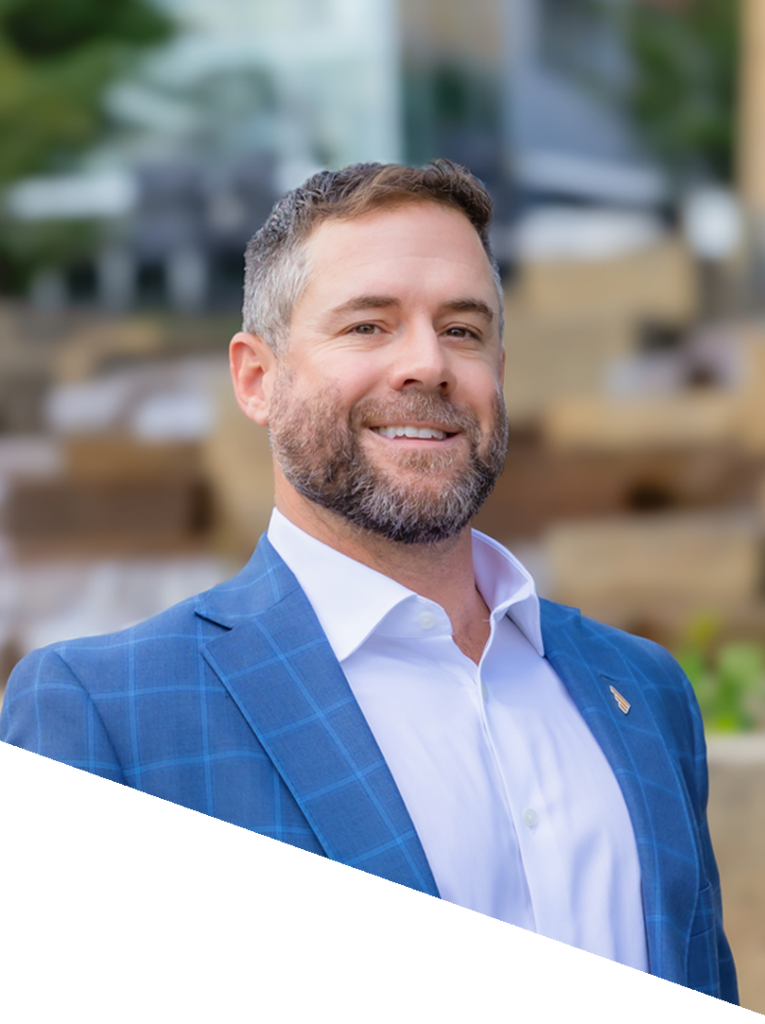
Regional Vice President
Philip Matthews
About:
Philip brings over 20 years of experience in sales and relationship management, including more than 15 years in the banking industry. Philip discovered his passion for banking and business development when his career began as a teller at Wells Fargo. He has a strong track record of managing and growing large client portfolios while building lasting relationships across competitive markets.
Ready to experience The Altitude Approach? Contact us today. We’re excited to learn about your next project and how we can help bring it to life.
Contact Altitude
Regional Vice President
Philip Matthews
About:
Philip brings over 20 years of experience in sales and relationship management, including more than 15 years in the banking industry. Philip discovered his passion for banking and business development when his career began as a teller at Wells Fargo. He has a strong track record of managing and growing large client portfolios while building lasting relationships across competitive markets.